

Every now and then, a dealer gets a car so strange it makes you question reality. We’re talking bubble cabins, spaceship wedges, and doors that open like you’re boarding a UFO. Even stories involving the Alex Manos Buyer show that European classics can get wonderfully weird before landing on a showroom floor. These aren’t typical Ferraris or Porsches. These are the oddballs. The misfits. The rolling science experiments. And somehow, they still command attention and serious money. Let’s dive in. Let’s see how every car is getting weirder from another, but also loved by many.
BMW Isetta
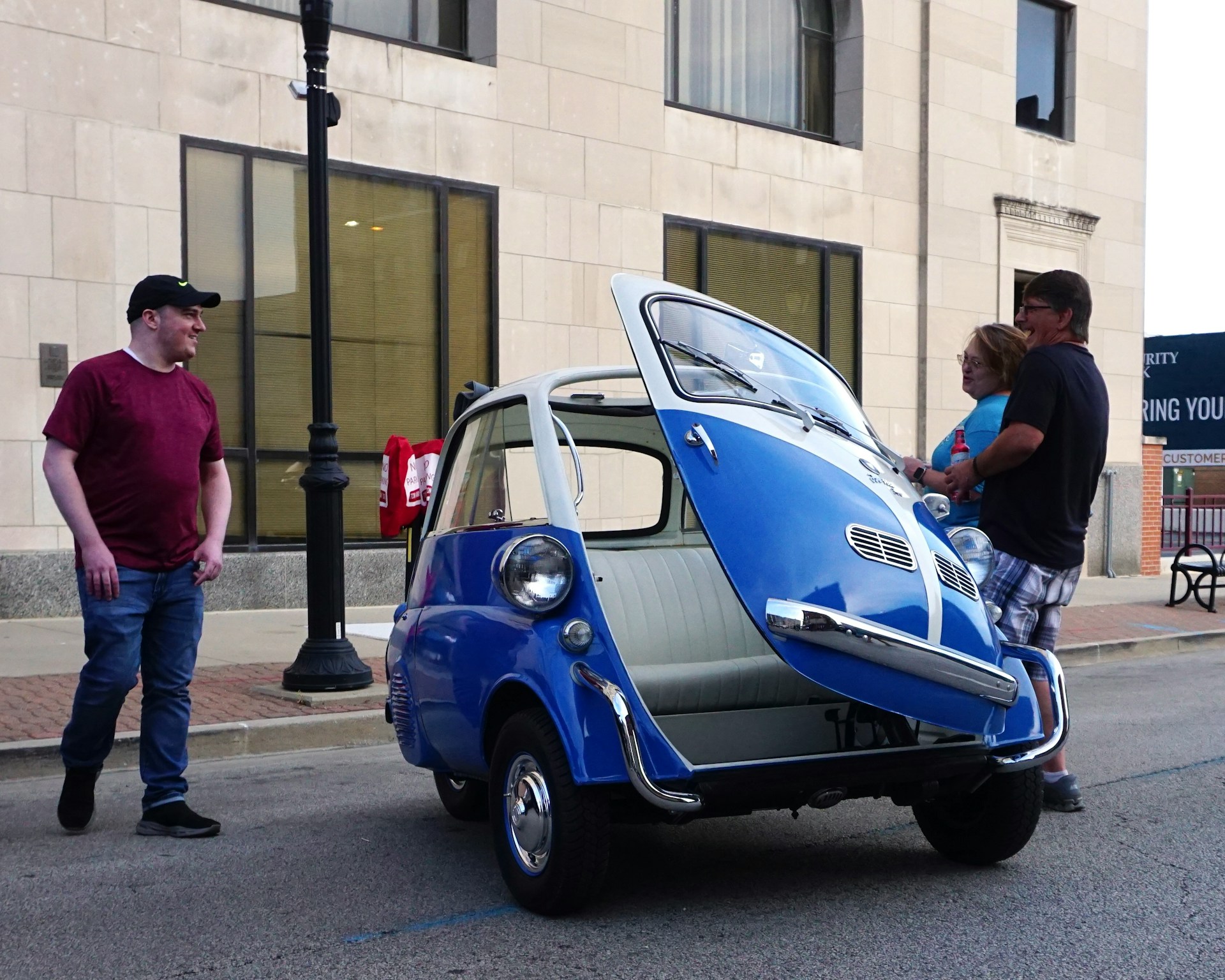
The BMW Isetta looks like someone shrunk a car in the wash. One front door. Tiny wheels. An engine that sounds like an enthusiastic lawn tool. Built in the 1950s, it used a small single-cylinder engine pushing around 13 horsepower. That’s less power than most riding mowers today. Yet it saved BMW financially during tough times. The entire front swings open to let you climb in. The steering column moves with the door. It’s an engineering theater. Dealers love examples with a clean microcar history. Collectors love the charm factor. It’s impossible to ignore. Drive one, and you’ll smile instantly. It’s slow, but that’s part of the magic.
1970 Lancia Stratos HF Zero
This thing looks illegal to operate on Earth. The Stratos HF Zero sits so low you practically slide into it from the windshield. Designed by Bertone, it was more concept sculpture than road machine. Power came from a modest 1.6-liter engine, but performance wasn’t the point. Drama was. The wedge profile predicted decades of supercar design. Sharp angles. Flat surfaces. No apologies. Dealers handling something like this aren’t just selling a car. They’re handling automotive art. Values stay strong because production numbers were tiny. It’s rare in the purest sense. Seeing one in person feels surreal. Like spotting a prop from a sci-fi movie.
1970 Ferrari 512 S Modulo

If the Stratos was wild, the 512 S Modulo went full spaceship. Pininfarina built it on a Ferrari race chassis, then wrapped it in a body that looks like a rolling triangle. The canopy slides forward instead of the doors opening sideways. Rear wheels are partially covered. It’s pure design rebellion. Underneath, it had serious performance roots. The race-derived V12 meant this wasn’t just visual noise. When a dealer acquires something like this, it becomes headline material. Collectors line up fast. It represents peak concept car thinking. Owning one is like owning a design manifesto on wheels.
Messerschmitt KR200
Yes, it’s related to aircraft history. After World War II restrictions, Messerschmitt shifted to microcars. The KR200 uses a tandem seating layout. One behind the other. Fighter jet vibes, minus the speed. Its tiny engine pushes it modestly, but the weight is minimal. Handling feels nimble in city streets. Dealers appreciate well-preserved examples because originality drives value. Replacement parts require patience. The bubble canopy flips open. It feels theatrical every time. This car proves that small can still be captivating.
European automotive history isn’t always polished grand tourers. Sometimes it’s bold experiments that look slightly unhinged. Dealers who handle these machines understand their niche appeal. They know buyers chasing character over conformity. Weird sells when the story is strong. And these cars have stories in spades.